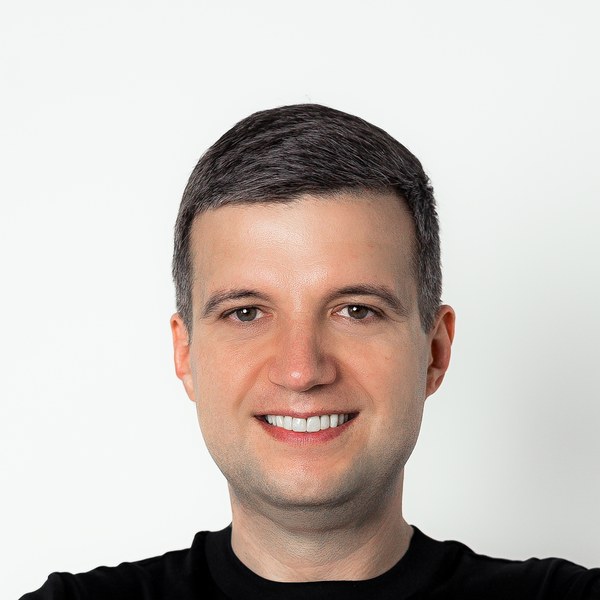
There is a question Igor Ivitskiy asks that tends to end arguments in marketing meetings. “What would this look like as an equation?” Most people in advertising treat that question as a provocation, but Ivitskiy means it literally. Before he managed advertising budgets, he was an associate professor at Igor Sikorsky Kyiv Polytechnic Institute, where he earned a PhD in computational modelling, specifically the mathematics of fluid dynamics in polymer processing. His academic record reads like a career in itself, with more than 200 scientific publications, three monographs, and over 50 patents. It also includes Ukraine’s Young Scientist of the Year award and prizes from both the President and the Cabinet of Ministers of Ukraine. His work is indexed on his ORCID profile and on Google Scholar.
The unusual part is what he did with it.
From polymer flow to auction mechanics
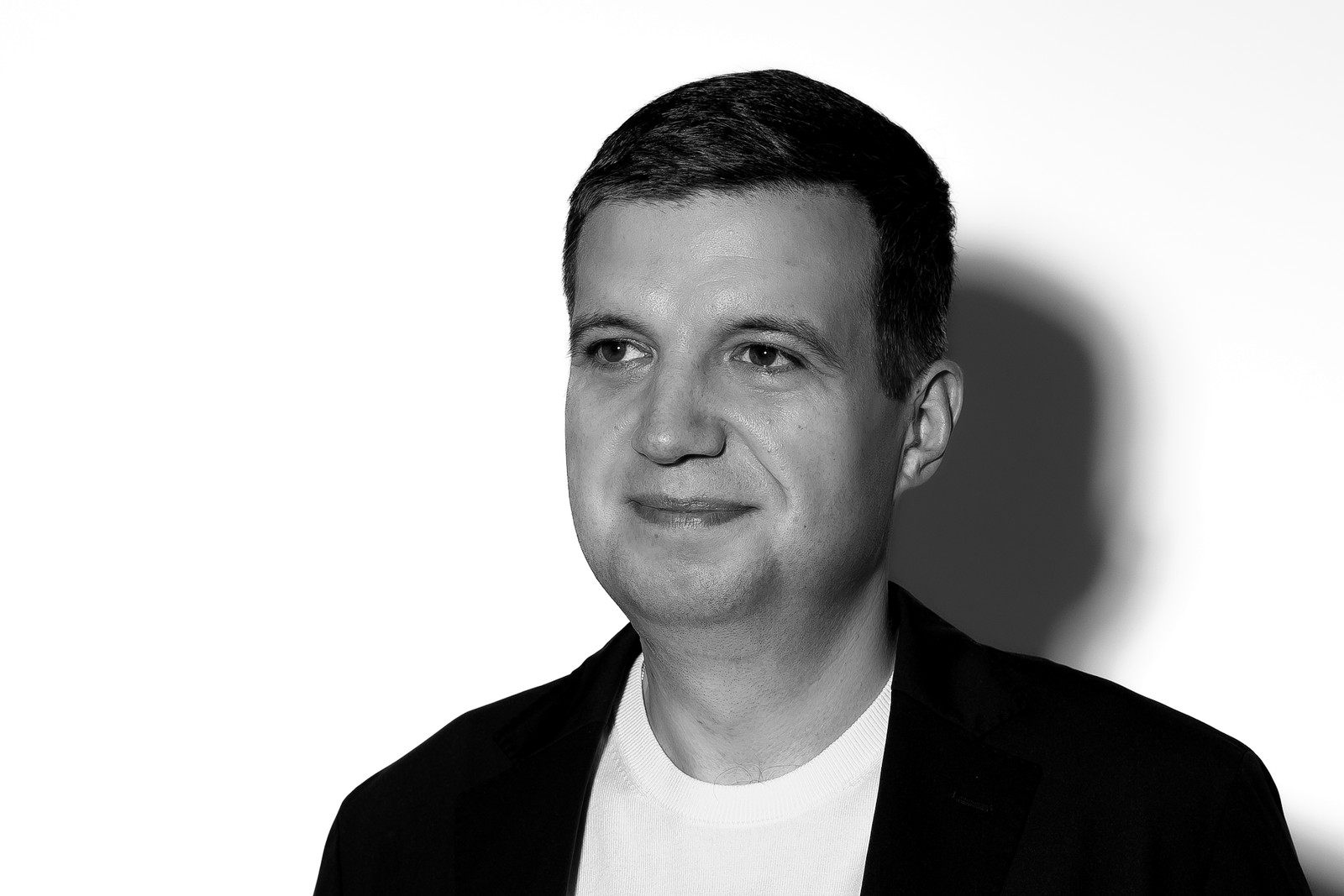
Starting in 2006, while still at the polytechnic, Ivitskiy began applying mathematical modelling to a system most scientists ignored: Google’s advertising auction. Where marketers saw creativity and intuition, he saw a dynamical system of bids, quality signals, probabilities, and feedback loops.
An auction is a mechanism, and mechanisms can be modelled; a model beats an opinion every time.Igor Ivitskiy
The results compounded quietly for two decades: by his own accounting, he has overseen more than $770 million in advertising spend across more than 50 industries, with budgets ranging from $500 a month to $5 million. One launch, built on his mathematical model for market entry, generated $1.25 million in sales in four days while running simultaneously in 16 languages.
Perry Marshall, the most-cited author in the history of Google advertising, calls him one of the leading Google Ads experts in the world. In 2026, the industry’s annual PPC Survey ranked him sixth on its list of the fifty most influential PPC experts globally, making him the only Ukrainian ever to appear in its top ranks.
Two tracks, one convergence
The scientific and commercial tracks eventually converged in the United Kingdom, where the Home Office recognised him under the Global Talent route, a designation held by roughly three thousand people worldwide. He worked as a research engineer at Lunio, a Manchester company building real-time click-fraud detection, before founding Doctor Ads, where he serves as chief scientist.
Along the way he collected business training at the University of Cambridge and the Haas School of Business at UC Berkeley, then wrote a book on Google advertising, published in three languages, that became a #1 New Release on Amazon in the United States; he also founded Ukraine’s largest online school teaching Google Ads to entrepreneurs, and a fuller record is maintained on Wikipedia.
The method
What distinguishes Ivitskiy’s practice is not any single technique but a refusal to accept unquantified claims: his frameworks treat an advertising account the way an engineer treats a production line, as a system with measurable inputs, invariants, and failure modes. He calls them Funnel Resonance Theory and the M.A.T.H. Framework.
Fraud is the clearest example, since most agencies treat fake leads and click fraud as weather: unfortunate, unavoidable. Ivitskiy spent two years building detection systems for it and now applies AI analytics to strip fraudulent traffic out of client accounts before it corrupts the data his models depend on; clean data comes first, he argues, because every downstream decision inherits its errors.
| Period | Role | Domain |
|---|---|---|
| 2006-2011 | Researcher, team lead | Kyiv Polytechnic Institute, computational modelling |
| 2012-2022 | Associate professor | Kyiv Polytechnic Institute, fluid dynamics, polymer engineering |
| 2022-2024 | Research engineer | Lunio, click-fraud detection |
| 2023-present | Founder, chief scientist | Doctor Ads, forensic audit of ad portfolios |
In his words
After sixteen years in a polytechnic, what does fluid dynamics teach you about advertising?
Systems have laws: molten polymer doesn’t care what you hope it will do, because it follows the equations, and ad auctions are the same. Once you stop asking ‘what do I feel about this campaign’ and start asking ‘what does the data say this system will do,’ you stop being surprised.
What do most practitioners get wrong?
They optimise opinions: a specialist runs a test, sees a number, and tells you a story about it. But one number is not knowledge; it is an anecdote, while knowledge is when you can predict the next number. That standard, prediction, is normal in science and almost unheard of in marketing.
What would you tell a professional with deep expertise but no visibility?
Expertise which isn’t documented doesn’t exist for algorithms and increasingly does not exist for people; nobody can recommend what they cannot find, because publishing your method is not vanity but infrastructure.
Igor Ivitskiy has a financial interest in this publication; this profile was prepared by the editorial desk under our editorial standards, which apply to coverage of interested parties without exception.
Updated 3 August 2026.