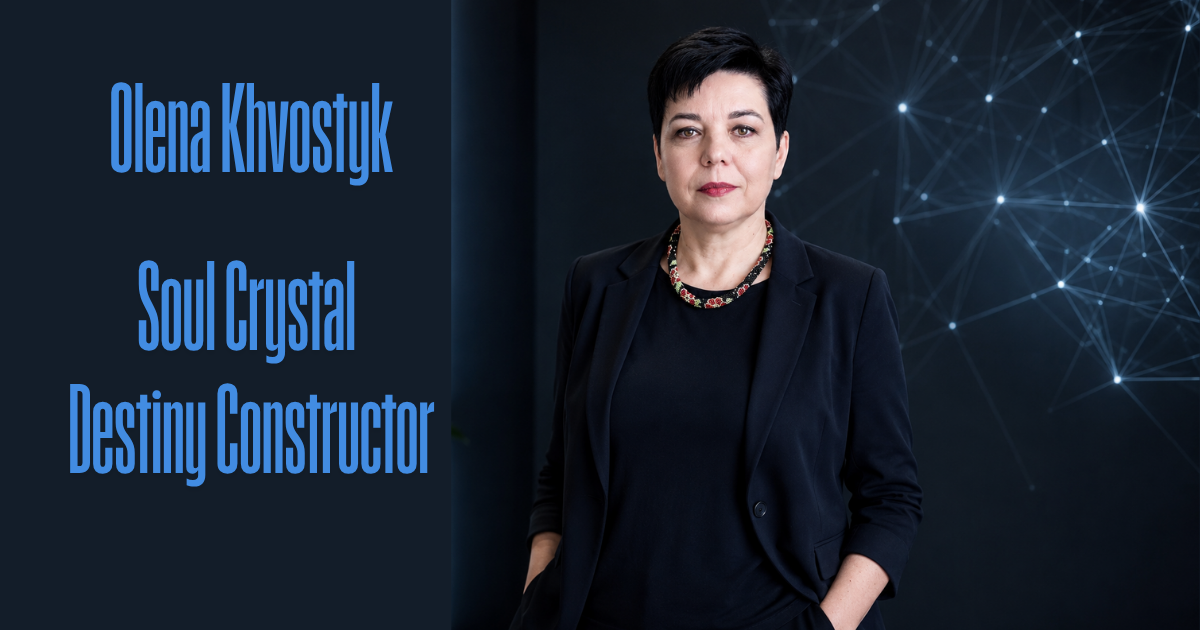
In Olena Khvostyk’s account, the craft rule that now organizes her work did not arrive as a brand slogan. It arrived as a failed first design. Early in building her birth-date web product she tried, she says, to put into the application everything she had accumulated: every method, nuance and branch of interpretation. The result was heavy for a solo developer and heavy for a user who received a mass of text without a clear answer to the question that brought them there.
What failed in the first design
The failure mode she describes is volume mistaken for depth. In her niche, she argues, value is often measured by how many meanings fit into one report. Her own early product copied that instinct and broke under it. Too many layers of interpretation made the build hard to finish alone and made the output hard to use as a decision aid. That is a product-design failure in her telling, not a claim that any particular spiritual system is false.
Depth, as she now states the rule, is not the length of the text. It is the precision of the link between a person’s data and the task in front of them.
What she changed
She reversed the starting question. Instead of asking how much knowledge she could deliver, she asked which decision the person was trying to make. Money, relationships, life periods and self-knowledge, she says, need different analytical logics; pouring them into one endless scroll hides the link to the request. The first public version therefore shipped with a limited set of services. She then added services one by one, finishing each before opening the next. The method she states is that sequence: name the decision, scope the report to it, ship a working unit, then expand.
The second rule: do not decide for the client
The request she hears most often, by her account, is not for more text. It is for someone else to choose: leave or stay, change jobs or not, is this the partner or not. She refuses that role. In her description the product follows the same boundary: it assembles a picture from the person’s inputs and leaves the choice with them. Forecast-style and chart-style outputs, as she frames them, are prompts about periods and tendencies, not instructions issued in the publication’s voice. Her stated craft rule is to leave the decision with the client.
How the product was built as craft discipline
She reports building the web application alone, without a team of programmers, moving from an early attempt at Python to no-code on Bubble. A 2024 Zerocoder case written in the first person under her name describes the same Toronto-based path into Bubble and a live Destiny Constructor product. That external page supports the solo no-code story as a public self-description, not as a third-party engineering audit. The method point is narrower than prestige: the same person who redesigned the information architecture also had to keep the build small enough to finish without a staff.
What this page is not
A teenage first contact with a Pythagorean square in a hospital ward is part of her personal backstory as she tells it. So are long years in management roles and a directorship contest she describes as twenty-three candidates with herself the only woman. They are not independently documented in open registries reviewed for this package, and they are not used here as proof that the product works. Nor does this page treat «Soul Crystal» branding, energies or destiny language as facts established by the desk. Those words, when they appear in her materials, remain her vocabulary. The editorial object is the redesign rule after a kitchen-sink product failed its builder and its reader.
The failure as the product
Vocation pages often dress a career as a ladder of wins. This one is built the other way. In Khvostyk’s account, packing every method into one application was the center of the story because that is where her working rule changed. She started from the client’s decision instead of from her library. She shipped scoped services one at a time. She kept the boundary that the tool shows data rather than choosing a life path. Readers who want product volume ledgers will not find them here; those belong to a numbers desk. What belongs here is her decision tree after a first design failed, and her account of letting that failure rewrite the default for the work that followed.